

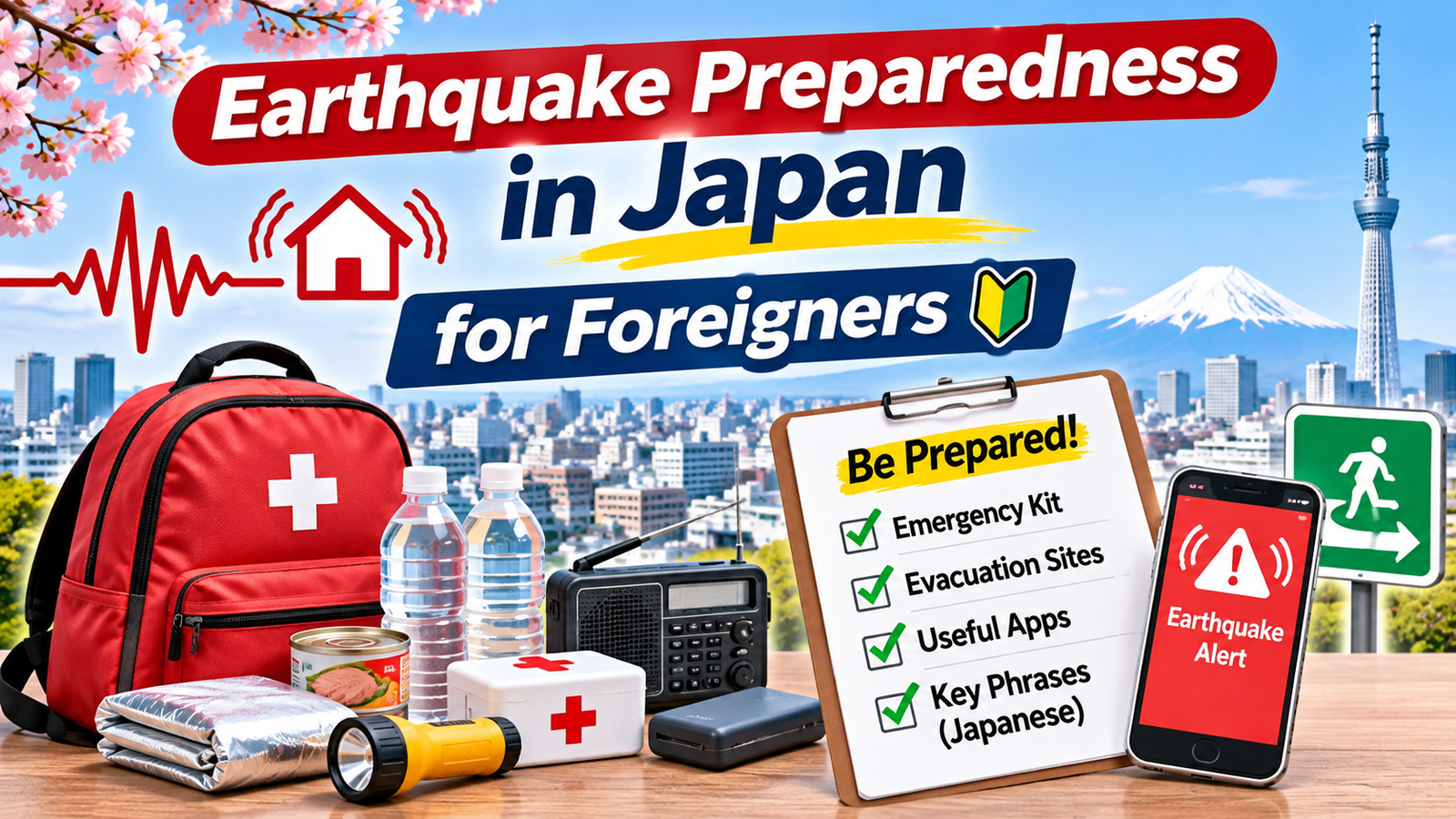
Japan experiences frequent earthquakes, so every resident and visitor should prepare. The essentials are: secure heavy furniture, keep an emergency kit with at least three days of water (about three liters per person per day), food and medicine, learn the location of your local evacuation site, install a disaster information app such as Safety tips from the Japan Tourism Agency, and agree on how your family will contact each other, for example through the 171 Disaster Emergency Message Dial. During a quake, protect your head and stay away from windows and falling objects; if you are near the coast and feel strong shaking or hear a tsunami warning, move to high ground immediately.
Japan sits on the boundaries of several tectonic plates and records thousands of earthquakes each year, most of them too small to notice. Large earthquakes are rarer, but they do happen, and the country has built one of the world’s most advanced warning and response systems. For foreign residents, the challenge is often language: alerts, announcements and guidance are mainly in Japanese. This guide explains how to prepare your home, what to keep in an emergency kit, how alerts work, how to read the shindo scale, and what to do during and after an earthquake.
Understanding earthquakes in Japan
Japan measures earthquakes in two ways. Magnitude describes the energy released at the source. Shindo (震度), the Japanese seismic intensity scale, describes how strongly the shaking is felt at a particular place, and it is the number you will see in news reports and alerts.
| Shindo | What you feel | Possible effects |
|---|---|---|
| 1–2 | Slight shaking, noticed by some people indoors | No damage |
| 3 | Most people indoors feel it | Dishes may rattle |
| 4 | Strong shaking, many people startled | Hanging objects swing, unstable items may fall |
| 5 lower / 5 upper | Difficult to move, many people frightened | Furniture may topple, dishes and books fall |
| 6 lower / 6 upper | Hard to stand or impossible to move | Heavy furniture falls, buildings may be damaged |
| 7 | Thrown by the shaking | Severe damage to many buildings |
Modern Japanese buildings are built to strict earthquake standards, which were significantly strengthened in 1981 and again in 2000. Older wooden houses are more vulnerable, so when renting, ask when the building was constructed.
Preparing your home
Most injuries in earthquakes are caused by falling furniture and objects, not by buildings collapsing. Fix tall furniture such as bookshelves and wardrobes to walls with brackets or tension poles, which are sold at home centers. Keep heavy items on lower shelves, use anti-slip mats under televisions and appliances, and apply anti-shatter film to windows if possible. Avoid placing your bed under heavy objects or near large windows. Keep shoes and a flashlight near your bed, because broken glass is common after a strong quake.
Building an emergency kit
Prepare two types of supplies: a grab bag to take if you evacuate, and home stock for living at home without water, electricity or gas for several days. Authorities recommend at least three days of supplies, and ideally a week.
| Item | Recommended amount or notes |
|---|---|
| Drinking water | About 3 liters per person per day |
| Non-perishable food | Canned food, ready meals, crackers, energy bars |
| Medicine and copies of prescriptions | At least several days’ supply |
| Flashlight and spare batteries | One per person if possible |
| Portable phone charger | Fully charged, plus a solar or hand-crank radio if possible |
| Copies of documents | Passport, residence card, insurance and emergency contacts |
| Cash in small notes and coins | ATMs and card payments may not work |
| First-aid kit, masks and hygiene items | Including wet wipes and toilet bags |
| Warm clothing and blankets | Shelters can be cold |
Check expiry dates once or twice a year. Many people refresh their kits on Disaster Prevention Day, September 1, the anniversary of the 1923 Great Kanto Earthquake.
Alerts and apps to install
Japan’s Earthquake Early Warning (緊急地震速報) system detects the first waves of a quake and sends alerts to phones, TV and radio seconds before strong shaking arrives. Your phone may make a loud, distinctive alarm. When you hear it, protect yourself immediately.
The free Safety tips app, supported by the Japan Tourism Agency, sends earthquake, tsunami, weather and other alerts in multiple languages and lists evacuation information. NHK WORLD-JAPAN provides news and emergency information in English and other languages. Your city office may also have its own disaster app or email alerts in foreign languages. Install at least one multilingual app before you need it.
What to do during an earthquake
If you are indoors, drop down, take cover under a sturdy table, protect your head and hold on until the shaking stops. Stay away from windows, shelves and hanging objects. Do not run outside during strong shaking, because falling glass, signs and tiles are dangerous. If you are cooking, turn off the stove only if it is safe to do so; most gas systems shut off automatically. In an elevator, press the buttons for all floors and get off at the first stop. Outdoors, move away from buildings, walls, vending machines and power lines. On a train, hold on tightly and follow staff instructions.
Tsunami: move to high ground
If you are near the coast and feel strong or long shaking, or hear a tsunami warning, move to high ground or the upper floors of a tall, sturdy building immediately. Do not wait for official instructions, and do not go to the coast to look at the sea. Tsunami warnings may stay in place for hours, and later waves can be larger than the first.
After the earthquake
Check yourself and others for injuries, put on shoes, and look for gas leaks, fires and damage. Expect aftershocks. Follow announcements from your city and evacuate to a designated evacuation site if your home is unsafe or you are told to leave. Evacuation sites and shelters are open to everyone, including foreign residents and tourists, regardless of nationality or visa status. Use text messages, social media or the 171 Disaster Emergency Message Dial and the web-based disaster message board to tell family you are safe, because phone lines may be overloaded.
Special notes for foreign residents
Register your address correctly at your city office so you receive local disaster information. Find your nearest evacuation site on your city’s hazard map, which shows risks of flooding, landslides and tsunamis. Learn a few key Japanese words, such as 避難 (hinan, evacuate), 地震 (jishin, earthquake) and 津波 (tsunami). Register with your country’s embassy if it offers a traveler or resident registration service, so it can contact you in an emergency. Keep your residence card and passport in a place you can reach quickly.
Frequently asked questions
What should I do first when an earthquake starts?
Drop, take cover under sturdy furniture, protect your head and hold on until the shaking stops.
How much water should I store?
About three liters per person per day, for at least three days and ideally a week.
Can foreigners use evacuation shelters?
Yes. Shelters are open to everyone, regardless of nationality or visa status.
Which app gives earthquake alerts in English?
The Safety tips app provides multilingual alerts, and NHK WORLD-JAPAN offers English news.
What is shindo?
Japan’s seismic intensity scale from 0 to 7, describing how strong the shaking is at a specific place.
What should I do if there is a tsunami warning?
Move to high ground or the upper floors of a strong building immediately and stay there until the warning is lifted.
This article is general safety information. Follow instructions from local authorities and check your city’s hazard map.